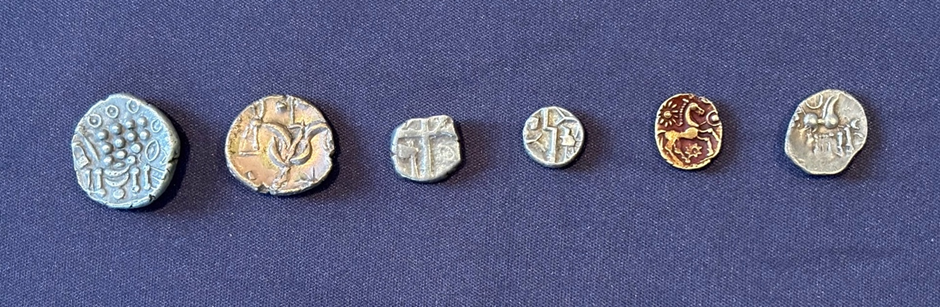
Last time we discussed that ‘The Celts’ were not a homogeneous people but rather a collection of different tribes and rulers and that they had an oral tradition rather than a written one. We also discussed that many of these Celtic tribes produced their own coins and that they followed the Roman convention of ‘heads and tails’, but with their own Celtic brand of artistry. In this post, let’s have a look at some Celtic tails (or reverses) to figure out what the ancient Celts might have valued. We know from Roman sources that the Celts were by and large a warring bunch- both with each other and with the Romans- so might this mean that war like imagery and weaponry was valued by them? We also know that horses were valued throughout the ancient world as a symbol of status and military strength- so might we see horses depicted on Celtic coinage? Let’s have a look.
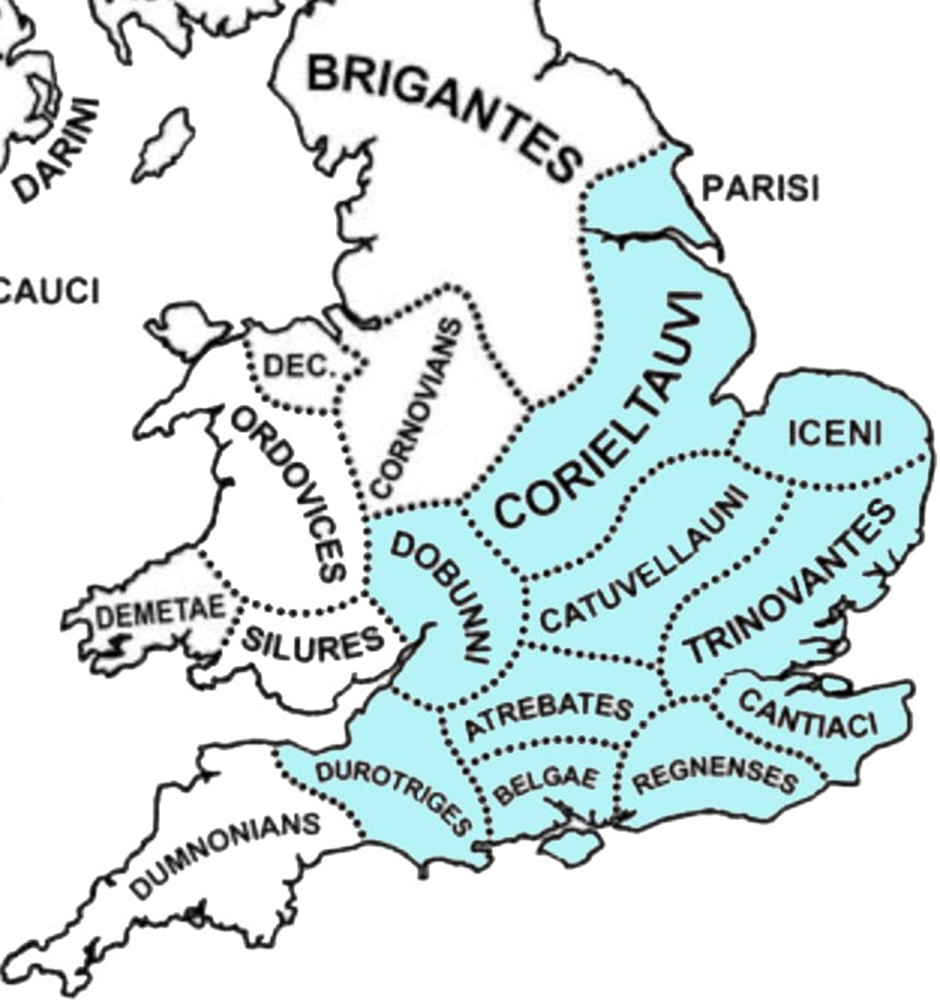
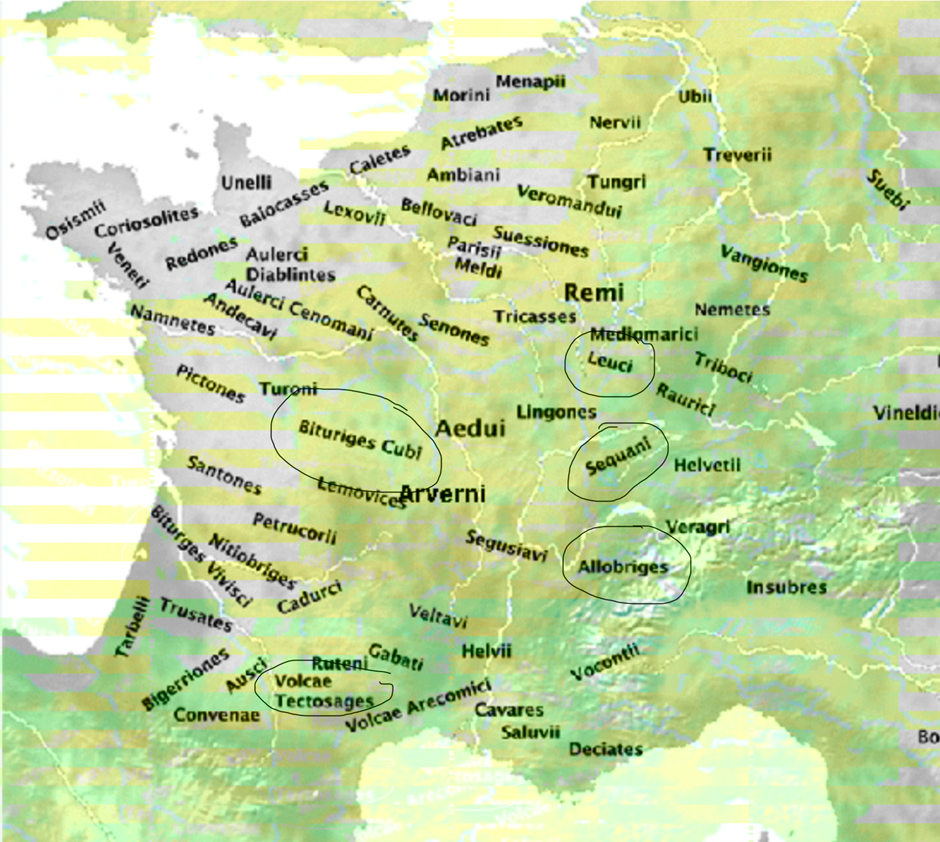
Here are some maps to remind us of the various Gaulish and Ancient British tribes we will be discussing. As previously mentioned, all coins are from the author’s own collection, unless otherwise specified, and are dated to the 1st century BCE.
Horses a plenty
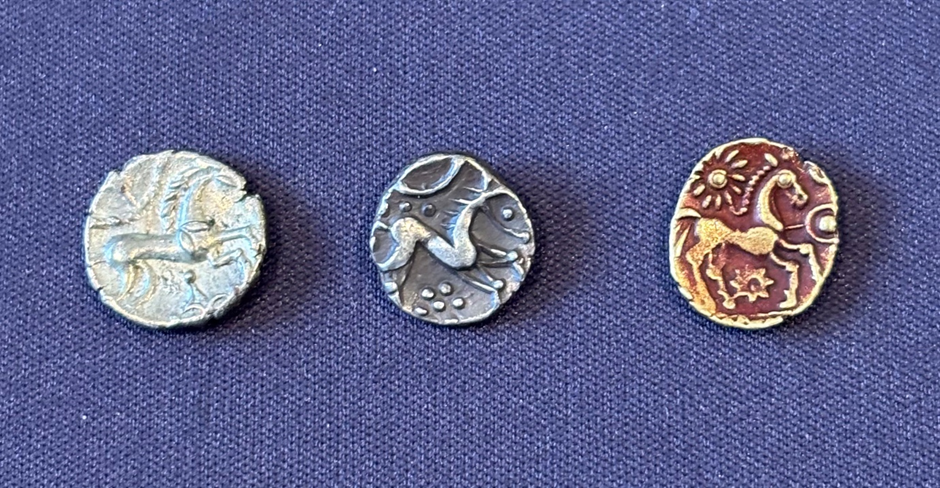
Horses are indeed ubiquitous throughout Celtic coinage. In figure 4 we see three readily identifiable horses on ancient British coinage. In each of these examples there is a horse with a mane and a stylised sun on the top left of the field. Each horse is jumping over some type of structure- in the first, an unidentified pointed object, in the second a floral structure composed of pellets, and in the third a cogwheel object which probably represents a chariot. Note also on this coin the horse has a triple tail- a common depiction in Celtic coinage.
The next examples in Figure 5 are also of horses, although these are much more abstract.
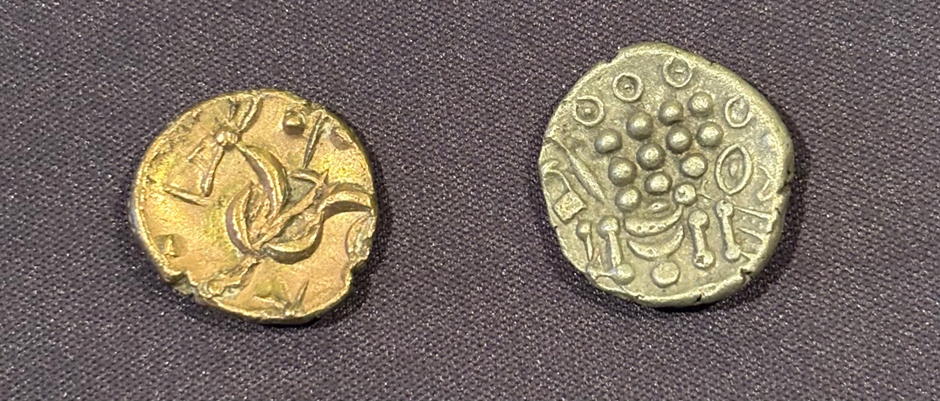
The horse on the left from the Corieltavi (or Corieltauvi) tribe of modern-day East Midlands is described as a lunate design, composed of crescents with a ‘nappy pin’ type of stylised head. Note also the structure at the 1 o’clock position which is common throughout Celtic coinage and is thought to denote the charioteer’s arms. This horse is jumping over a star, which is partially off flan in this example. Truly a beautiful depiction of a horse!
The horse on the right is from the Durotriges tribe of modern Dorset, and is even more abstract, if that’s possible. There is a padlock type structure at 9 o’clock, which is the head. Two crescents represent the body, with four legs below. There is an oval structure at 3 o’clock which is commonly referred to as a ‘coffee bean’ and is thought to represent a chariot wheel, with the three lines below this representing a triple tail. The 12 pellets above the horse are a source of much debate: the fact that there are always 12 may indicate a lunar calendar connection, but this is not certain. These pellets were likely to be of great significance to the ancient Celts and it is unfortunate that their meaning has been lost to us.
Weaponry
Figure 6 shows that there is evidence of the use of weaponry on these three coins from Celtic Gaul.
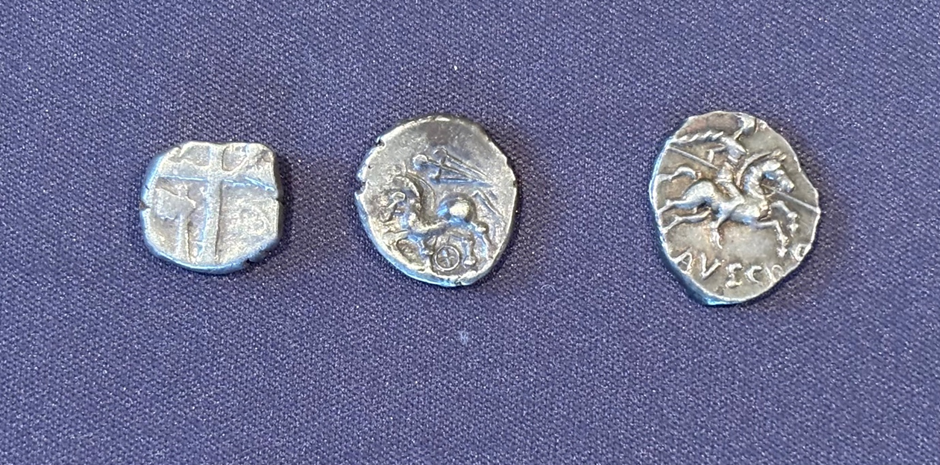
On the left of Figure 6, this Volcae Tectosages reverse is divided into four sections by a cross, the bottom left clearly showing an axe. The next along Bituriges Cubi coin shows a typical horse depiction, with a wheel below and an impressive sword above. On the right this coin from the Allobroges tribe shows a horseman with a spear. These examples certainly indicate that the ancient Celts were keen to showcase their military strength.
A surprise!
Have a look at Figure 7.
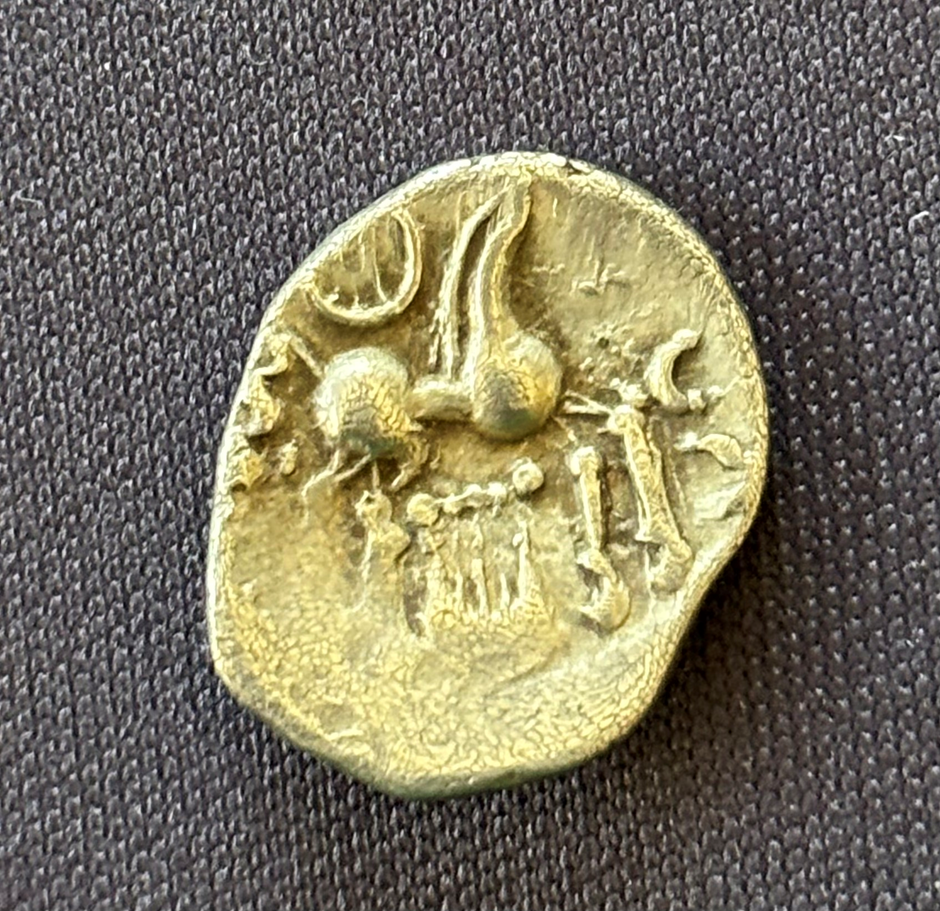
This appears to be similar to the other horses we have seen, except there is a spoked wheel in the upper left of the field, and in this case the horse is jumping over a lyre (an ancient musical instrument, similar to a small harp). This coin is called the Sussex Lyre, and it certainly indicates that the Regini tribe of modern-day Sussex were keen to demonstrate their love of music, which may come as a surprise to those who considered Celtic tribes to be primitive societies.
Wildlife
As well as wishing to demonstrate their military strength, the Celts are also well known for their depictions of their external environment, particularly wildlife. In figure 7 we can see two lovely examples of sea creatures.
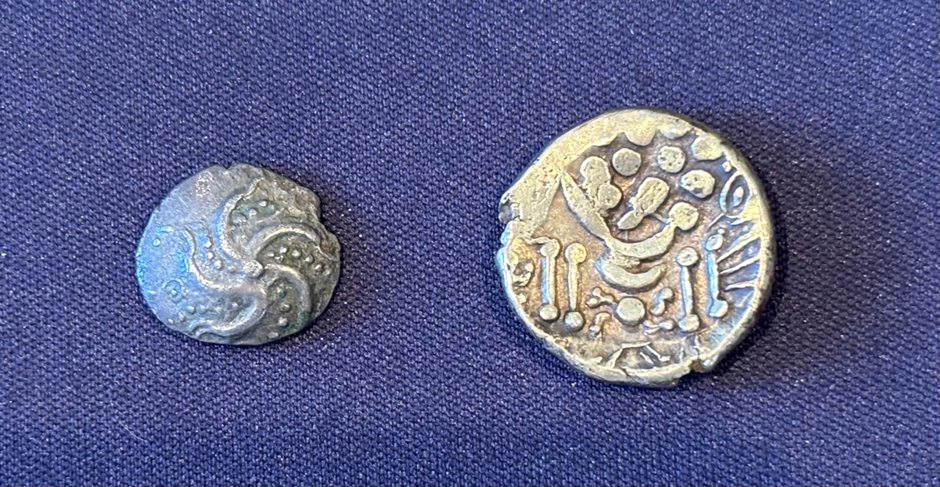
The Durotriges and Belgae tribes were both coastal territories- it is therefore not surprising that they depicted sea creatures on some of their coins. The Durotriges obverse on the left depicts a starfish. The Belgae reverse on the right depicts a Cranborne Chase type of horse, which we discussed earlier. You can see just under the body of the horse is a rather cute crab.
Figure 9 shows some other animals.
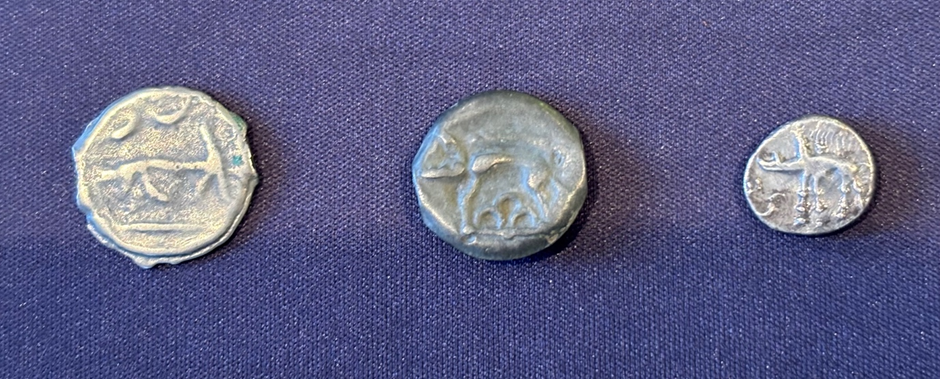
On the left we have a very basic outline of an animal from a coin of the Cantiaci (or Cantii) tribe of Kent- this is generally taken to represent a bull. In the middle we have a coin from the Leuci tribe of Gaul showing another basic form, this time representing a wolf, with a simple depiction of hills below. This is one of my favourite coins- a simple yet effective representation of a wolf howling in the wilderness. Finally, we have a representation of a boar on a coin from the Sequani tribe of Gaul. Boars were animals which were commonly hunted in the ancient world, their strength and ferocity seen very much as a challenge to a hunter. They are frequently depicted on Celtic coinage and are relatively easy to spot due to their small snout and prickly back.
The Unknown
We have previously discussed that some depictions on Celtic coins are impossible to interpret. Have a look at this Durotriges reverse in Figure 10, which is a case in point.
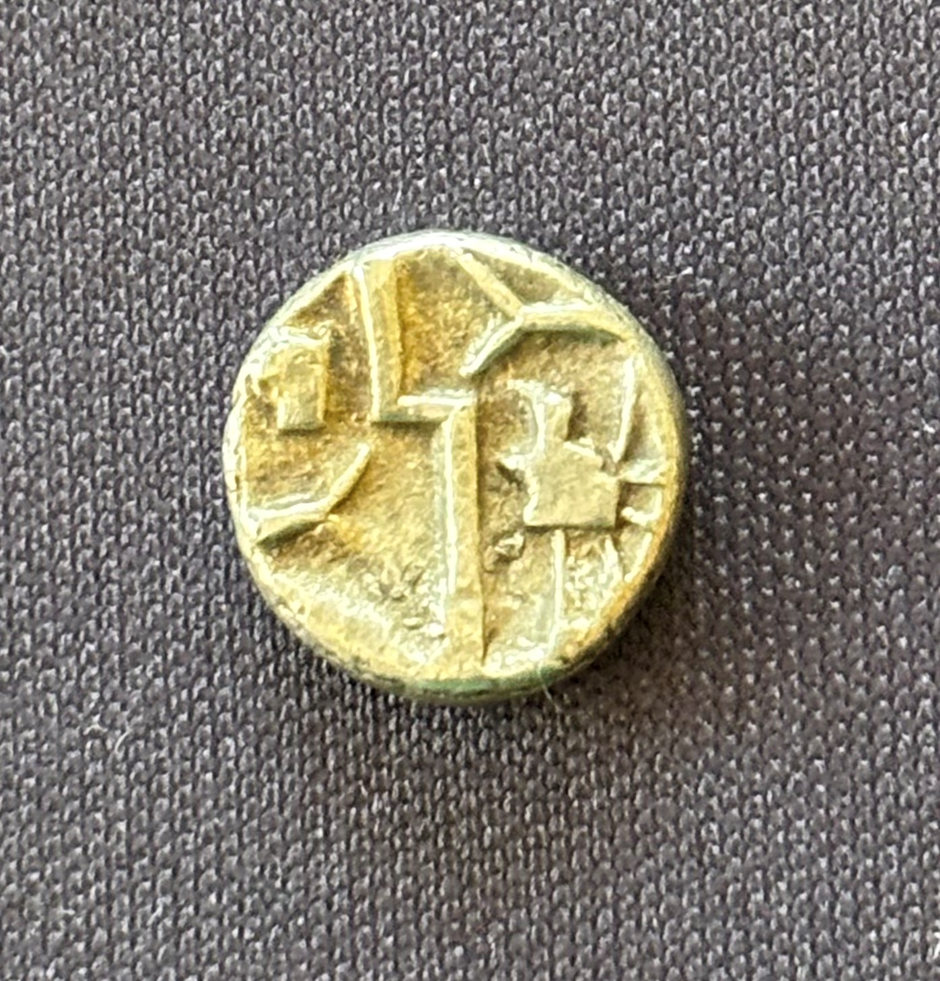
The zigzag structure in the middle is a common feature in Celtic coinage and the modern interpretation is that it represents a thunderbolt, although this is not certain. The other objects are also difficult to interpret: the object on the right has been postulated to be either a bird or a tree with roots and branches, but these are quite simply guesses. How would the ancient Celts have interpreted this scene? Would it have been instantly recognisable to them? Unfortunately, it is impossible to know.
Summary
We have seen how the ancient Celts represented their love of horses and other wildlife on their coinage, as well as signalling their military strength and readiness for battle. We also had a suggestion that they appreciated music, indicating some degree of cultural sophistication. Celtic coinage certainly incorporated many of the elements of the Greek and Roman coinage which preceded them, but rather than being direct copies, the diverse people that were the Celts took inspiration from these originals in order to forge their own particular brand of artistry. This has resulted in a genre of coinage which can be challenging (and sometimes impossible) to interpret but is always thought provoking and beautiful.
Bibliography
- Celtic Coin Index (1961) Oxford University [Online]. Available at https://cci.arch.ox.ac.uk/ (Accessed 18 February 2026).
- Cottam, E., De Jersey, P., Rudd, C., Sills, J. (2010) Ancient British Coins, Chris Rudd, Aylsham.
- De La Tour, H. (1965) Atlas des Monnaies Gauloises, Spink & Son, London.
- Robinson, D. (2024) Durotrigan Quarter Staters, Amazon.

Leave a Reply