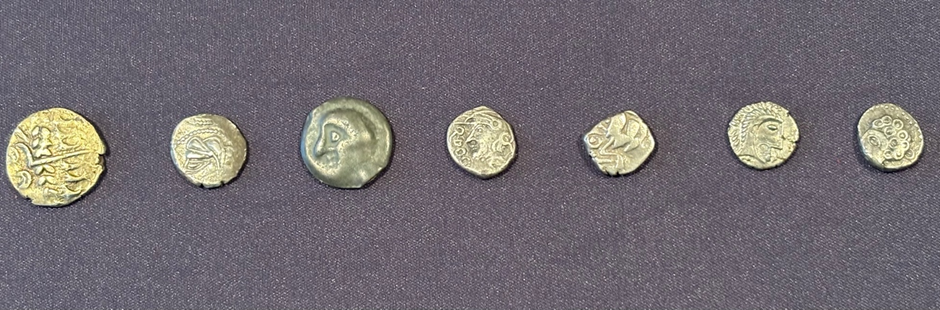
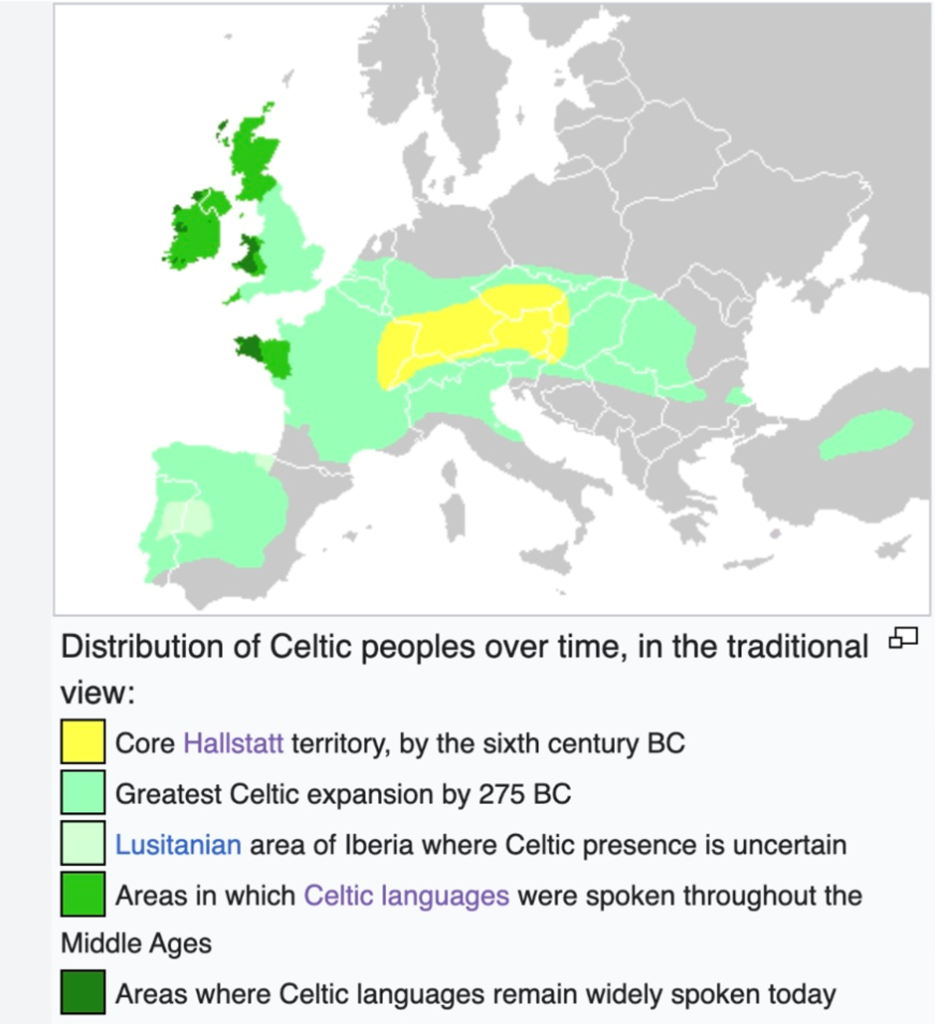
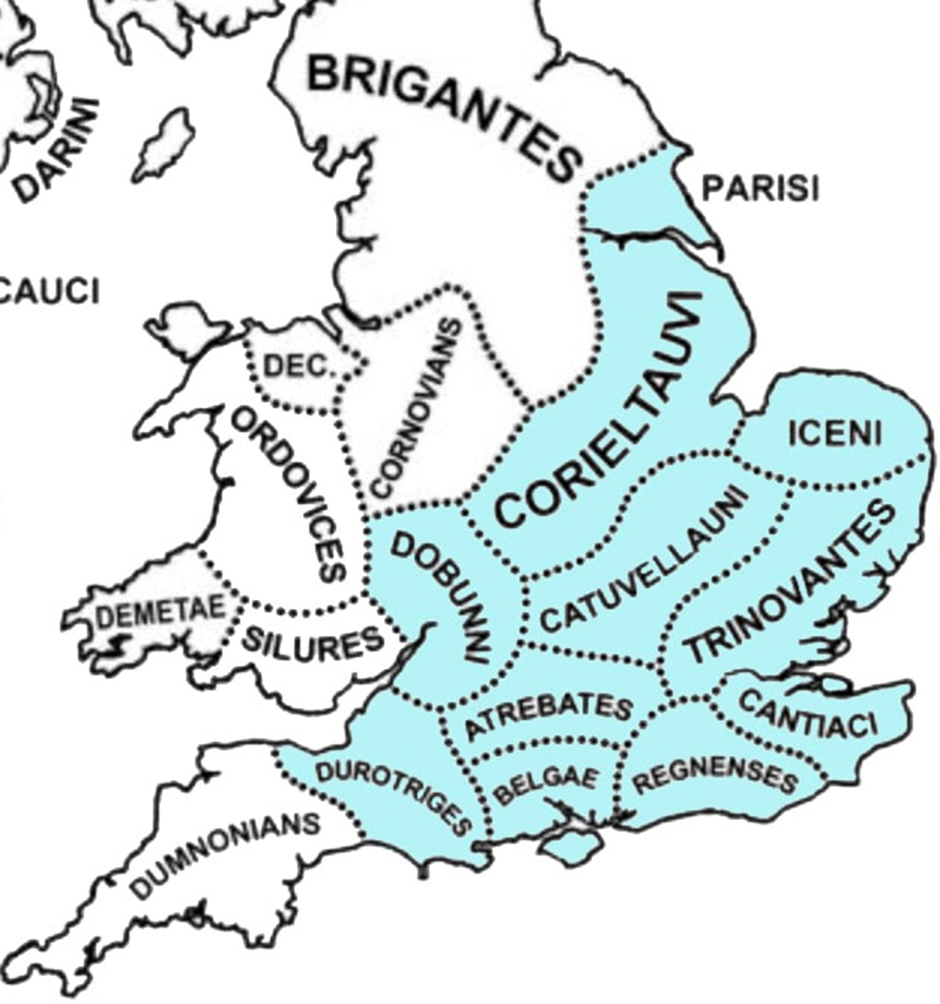
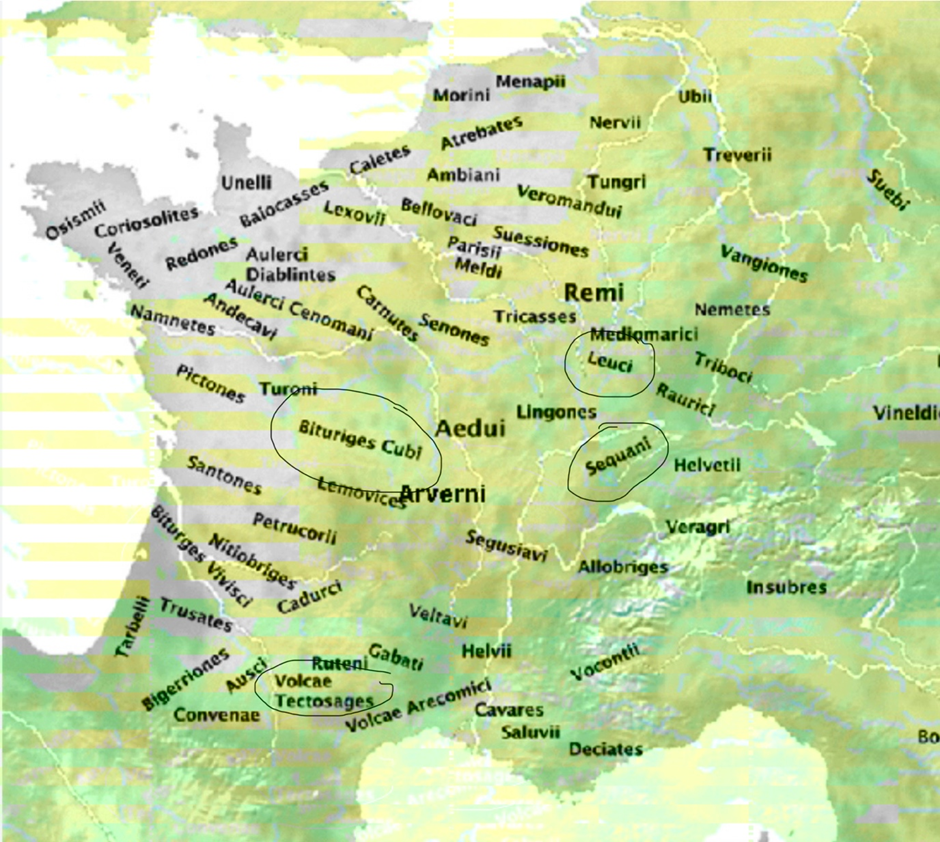
Who were ‘The Celts’? In Britain, many would guess that they were a British and/or Irish collection of Iron Age people with a rather primitive lifestyle and a strange pagan religion. However, ‘The Celts’ were actually a diverse collection of tribes who originated in central Europe around 1200 BCE and expanded into Britain, Ireland and France, as well as easterly into Turkey (Fig. 2). It is important to consider that, rather than being a homogeneous and unified group, they were composed of separate tribes and rulers, with various cultural and language similarities. These tribes had their own gods and a rich source of mythology which was passed through generations via oral tradition. Unfortunately, they did not commit any of their history to the written word and as a consequence the little of what we know about them is from other sources, such as Roman historians. Another surprise to many is that coinage was produced by the Celts. In this post we will look at the coinage produced by the Celtic tribes of Southeast England and Gaul in the second and first centuries BCE in order to assess whether this gives us any clues on the ancient Celts: who they were and what they valued (Figs 3 & 4).
Why Coins?
Celtic tribes had ‘barter’ economies and the reasons behind their move to produce coins are not well understood. One theory is that Celtic mercenaries returning home with Greek coinage may have played a part in the adoption of money into Celtic society. The earliest gold coins struck in Gaul were copies of staters issued by Phillip II of Macedon (359-336 BCE), with the earliest imported coinage into Britain being the Gallo- Belgic group of broad flan staters (Fig. 7). In Britain, gold coinage is thought to have been produced initially to fund resistance to the Roman invaders and then to pay tribute to them.
Celtic coins tended to follow the ancient Roman script of ‘heads and tails’, with some designs obviously being direct copies of Roman coins, and others following their own Celtic style. As previously discussed in my other posts, coins could be sources of propaganda in the ancient world, depicting aspects of religion and material culture which were important to a particular state or ruler. What aspects of Celtic culture, for example religious iconography or material culture, were important enough to be depicted on Celtic coins? Unless otherwise specified, all coins are from the author’s collection and are dated to the first century BCE.
The Roman Influence?
One example of where Celts may have been directly influenced by a particular coin is shown in Figure 5.
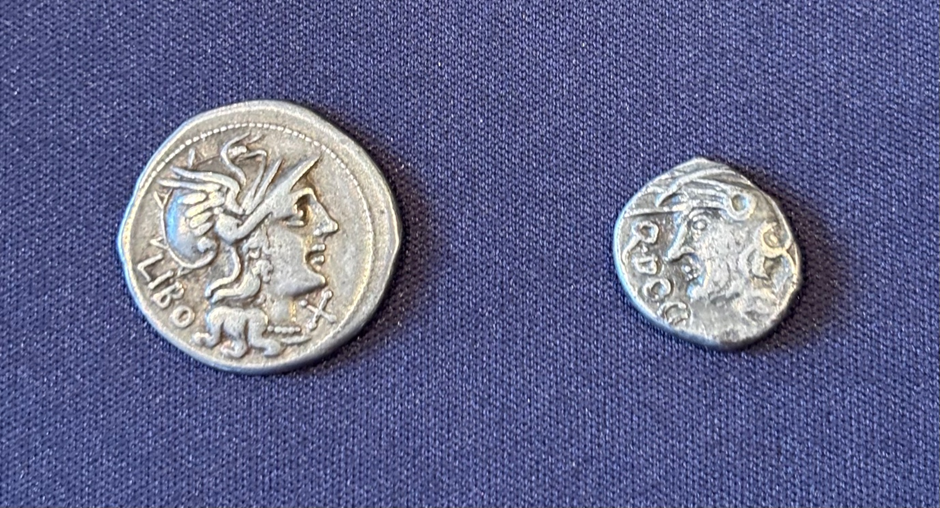
On the left is a common denarius from the Roman Republican period, which depicts the head of Roma, the personification of Rome who was worshipped as a deity. The moneyer who produced the coin was Q. (for Quintus) Marcius Libo. On the right is a quinarius (equivalent to half a denarius) from the Sequani tribe of Gaul. Some numismatists (although not all) describe the figure on the Celtic coin as a ‘Celticized head of Roma’. It certainly has the appearance of a deity, with its stern features and stylised headdress although whether this was indeed supposed to represent Roma, or perhaps a Celtic god, is ultimately unknown.
The inscription of Q. Doci is a source of much debate: Celtic leaders would occasionally inscribe their names on coins but the addition of Q for Quintus is unique. This was an exclusively Roman name, making this inscription puzzling and intriguing, and one which is unlikely to be fully explained. What is evident is that, although the Roman depiction of Roma is artistic on a realistic level, the Celtic depiction is similarly engaging but in a more surreal way.
Head of Apollo?
Are there any other examples of deities being represented on Celtic coins? Look at the depiction on the coin in Figure 6. This is the obverse of a gold stater from the Belgae tribe of modern day Hampshire and is referred to as the ‘wreath, cloak and crescents’ design. This design, with its inverted ear of corn appearance and central bar, is common on the obverses of the coins of Belgae and Durotriges tribes.
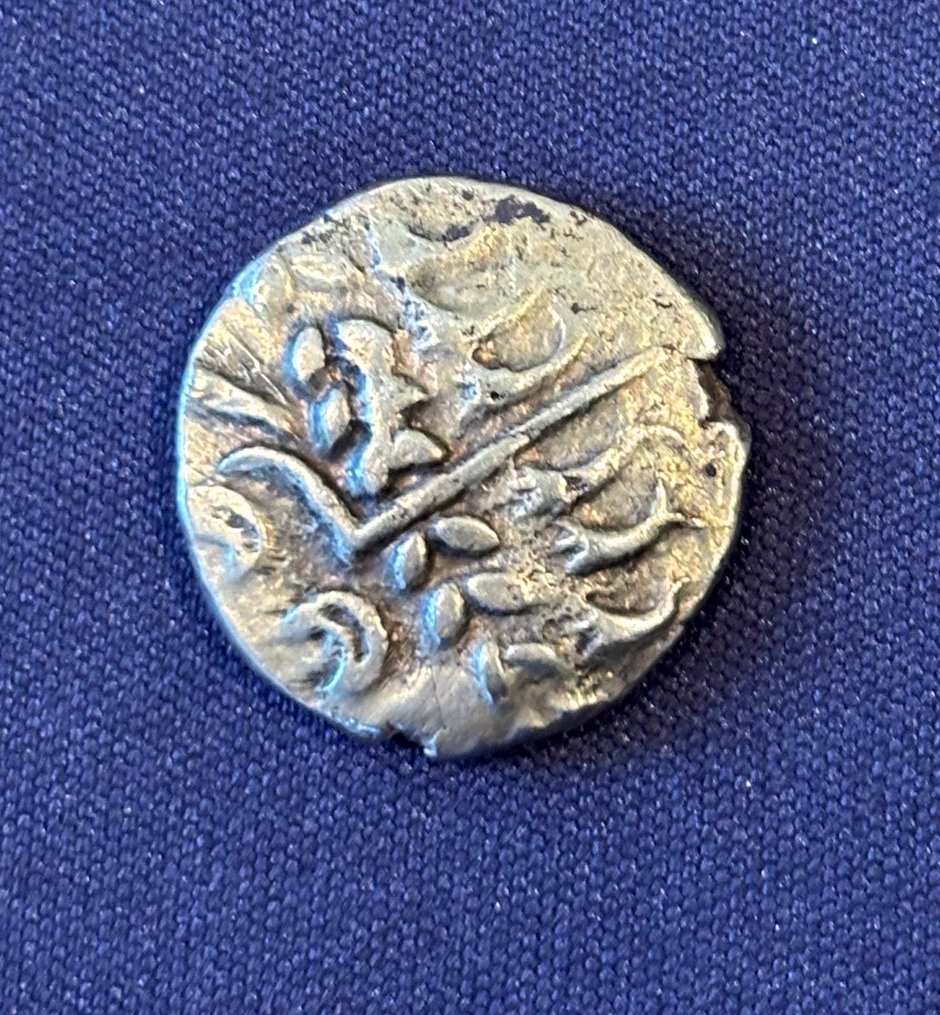
At first sight this depiction may appear rather confusing. Just what is this pattern supposed to represent? However, when we examine an example of an early Gallo- Belgic import from the Hunterian collection in Figure 7, we can see that this was originally a bust with a flamboyant headdress, which some numismatists consider to be the god Apollo.
For unknown reasons, the face was discarded from later coins produced by the Belgae and Durotriges tribes, leaving us with the wreath design alone.
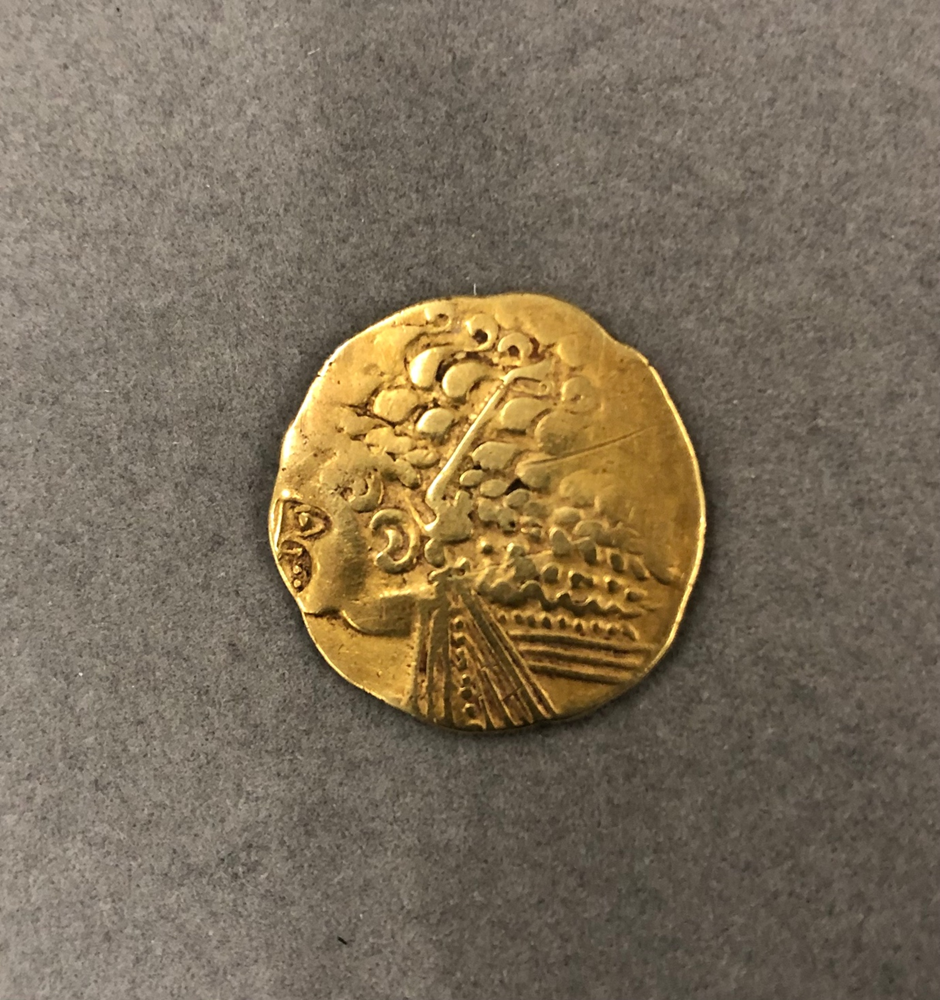
To summarise our discussion on whether these coin obverses represented deities, it seems likely that they did. Whether these were indeed Apollo and Roma is ultimately speculative, and we do not know how these designs would have been appreciated by the ancient Celts.
Male Heads
Just as the Romans depicted rulers on coin obverses, we would expect the Celts to represent their rulers. However, this is just as problematic as our depictions of deities. Look at the coin obverses in Figure 8.
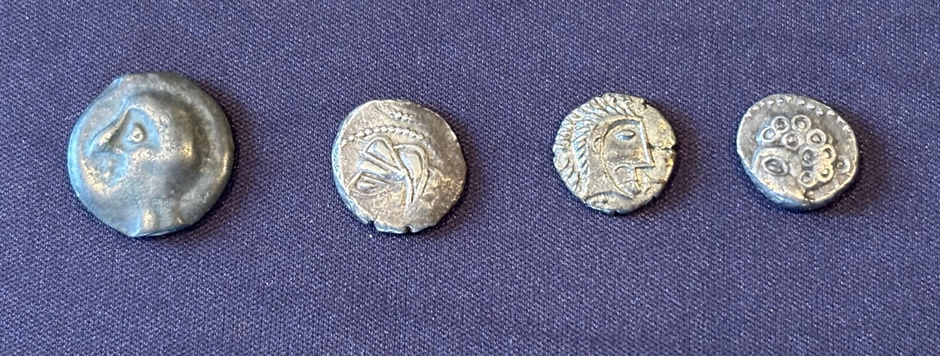
The first coin on the left is a potin coin (a mixture of copper, tin and lead) from the Leuci tribe in Gaul, showing a basic male head design. The next coin along is a silver quinarius from the Bituriges Cubi tribe of Central Gaul, showing a male figure wearing a helmet or headdress. The third coin along is a silver unit from the Iceni tribe of Britain (in modern day Norfolk) and was produced around the reign of Boudica. It shows a male figure with what is thought to be a boar-skin headdress and a moustache. And the last coin is a silver quinarius from the Sequani tribe of Gaul showing a wonderful depiction of a male with curly hair. It is very likely that these figures represented either tribal leaders or local gods. None of these coins have any associated inscriptions which might give us a clue. The Iceni coin is often referred to as a ‘Norfolk God’ although there is no actual evidence of the figure being a deity: he is just as likely to have been a ruler with an elaborate headdress.
So, it seems likely that the Celts followed the Roman tradition of depicting gods and leaders on their coins. However, due to our lack of written Celtic sources, interpreting them is rather problematic.
The Hidden Face
As well as following the Roman script of depicting heads and tails on their coins, the Celts are also known to be exceedingly playful in their depictions of hidden faces. Look at Figure 9, which is a silver drachm from the Volcae Tectosages tribe in Gaul. Do you see any faces?
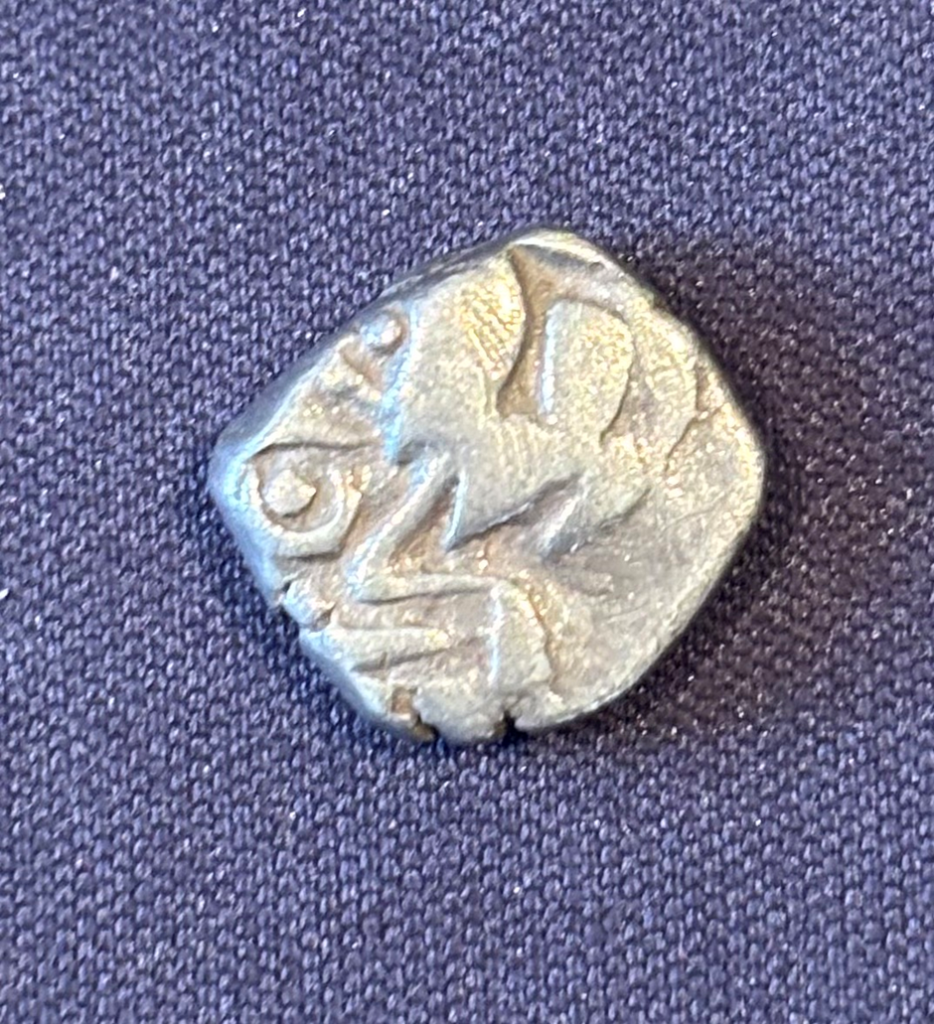
Perhaps this will help?
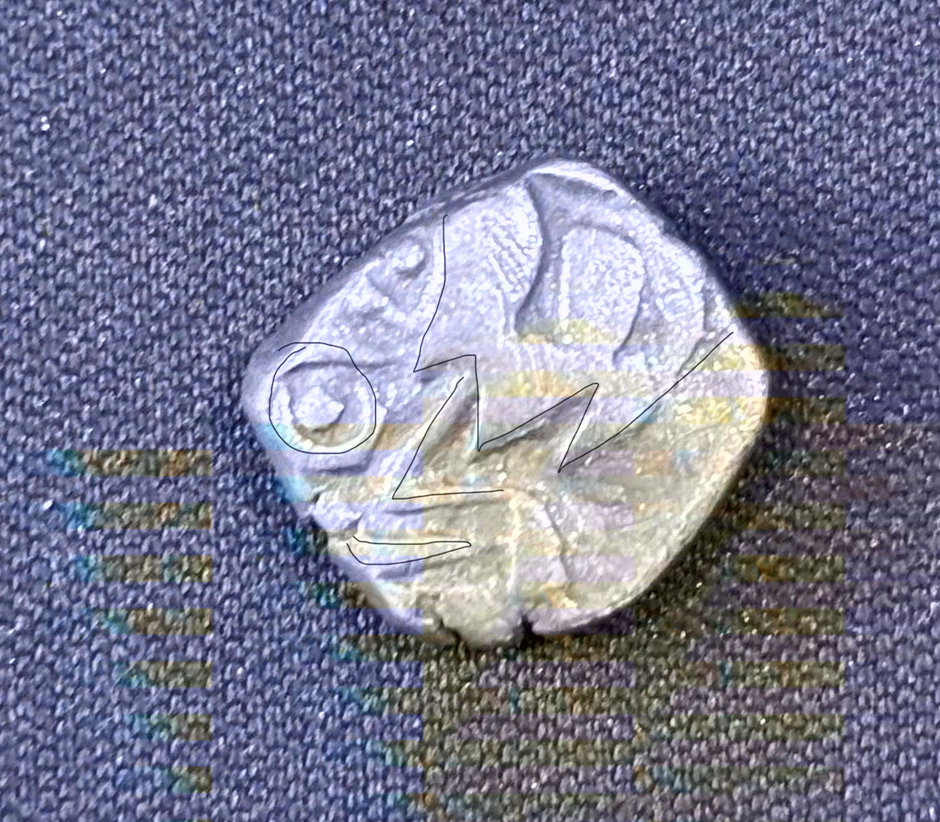
The right eye, nose and mouth are outlined. The left eye is obscured by hair.
On another view of the same coin…
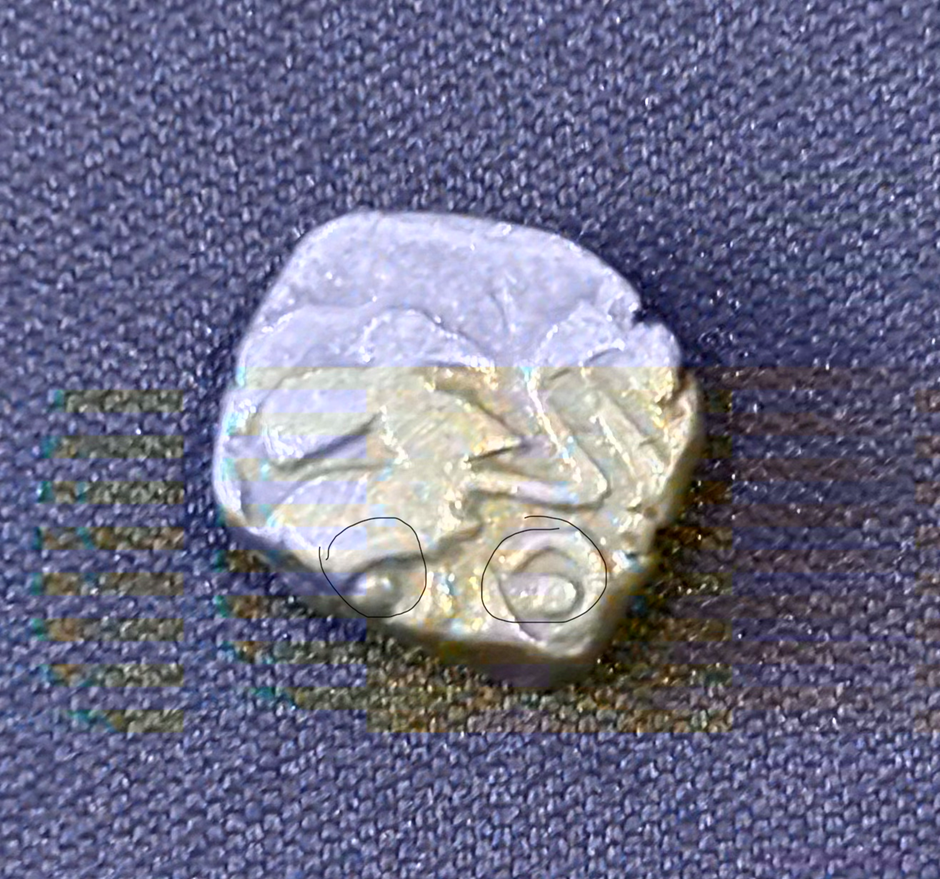
This little chap is peering over the edge!
There are many examples of hidden faces throughout Celtic coinage, although some are more obvious than others.
Conclusion
To summarise, there is no doubt that Celts followed the basic script of heads and tails from Roman coins. However, they also followed their own artistic conventions, with stylised depictions that verged on the abstract rather than the largely realistic approach of Greek and Roman coinage. I would suggest that, despite the obvious frustrations involved in interpreting Celtic coins, these surreal artistic depictions ensure that these coins can be seen as a more interesting and playful alternative to other ancient coinage.
Join me for my next post when we will be considering the reverses of Celtic coins- and discovering what the Celts valued in terms of material culture and the natural world.
Bibliography
- Celtic Coin Index (1961) Oxford University [Online]. Available at https://cci.arch.ox.ac.uk/ (Accessed 18 February 2026).
- Cottam, E., De Jersey, P., Rudd, C., Sills, J. (2010) Ancient British Coins, Chris Rudd, Aylsham.
- Rudd, C. (2015) ‘The Story of Celtic Coins’ [Online]. Available at https://celticcoins.com/story-celtic-coins/ (Accessed 18 February 2026).
- Sills, J. (2003) Gaulish and Early British Gold Coinage, Spink, London.



Leave a Reply